
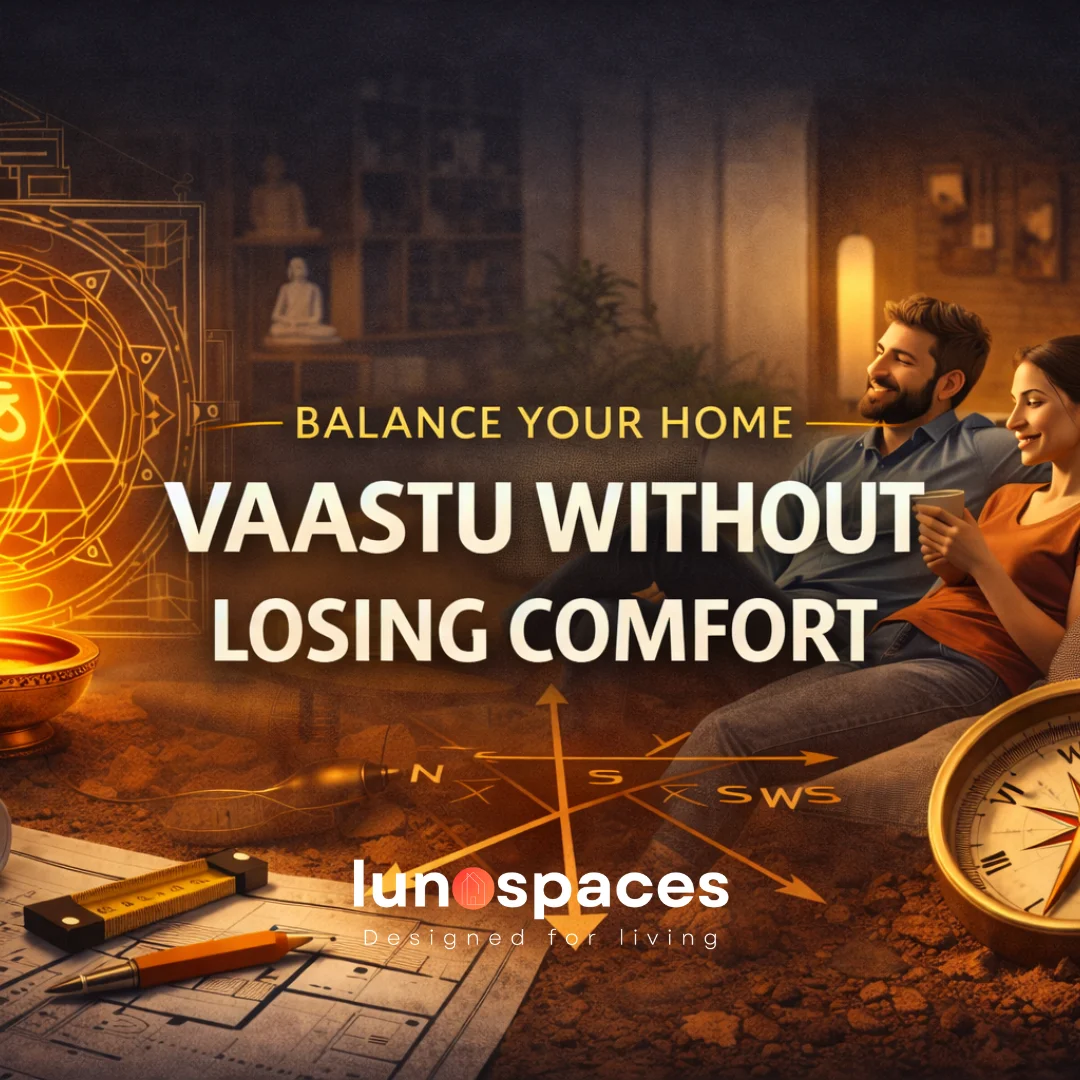
Can belief and everyday living truly coexist in a modern Indian home?

In India, very few people dismiss Vaastu outright.
Most families want to follow it,
but quietly worry about what they might have to give up.
- Natural Light
- Ventilation
- Room Sizes
- Daily Comfort
So the real question isn’t whether Vaastu matters.
It’s this:
Can Vaastu be followed without making the house uncomfortable to live in?
Where Vaastu Enters the Picture
Vaastu rarely enters early.
It usually arrives:
- After the plot is bought
- After rough planning is done
- Sometimes even after construction has started
Often through:
- A relative with strong opinions
- A neighbour’s past experience
- Or a consultant who hasn’t seen how the family lives
Suddenly, the plan that felt right yesterday starts feeling uncertain today.
How Comfort Slowly Gets Compromised
When Vaastu is applied without context, small compromises begin.
- Windows reduced to “adjust direction”
- Kitchens pushed into awkward corners
- Bedrooms losing ventilation
- Living spaces becoming darker
Nothing dramatic happens immediately.
But daily life slowly feels less comfortable.
And comfort, once compromised, is very hard to regain.
What Vaastu Was Originally Meant to Do
Vaastu was never about discomfort.
At its core, it considered:
- Sun movement
- Wind direction
- Climate
- Human activity
In other words, it was once deeply practical.
Problems arise when Vaastu becomes:
- Rigid rules instead of guiding principles
- Fear-driven instead of logic-driven
- Applied without understanding the plot
That’s when homes start feeling forced instead of natural.
The Real Conflict Is Not Vaastu vs Comfort
The real conflict is poor planning vs sensible planning.
When Vaastu is:
- Considered early
- Discussed calmly
- Balanced with architecture
It rarely demands extreme sacrifices.
But when Vaastu is forced after planning, comfort is usually the first thing to suffer.
A Very Common Scenario
Many homeowners insist:
“Master bedroom must be in southwest.”
Fair enough.
But if that corner:
- Receives harsh heat
- Lacks airflow
- Limits daylight
A sensible solution doesn’t reject Vaastu,
it interprets it intelligently.
Small design decisions in proportions, openings, and circulation often solve what rigid rules cannot.
Why Homeowners Feel Confused About Vaastu
Because they receive:
- Too many opinions
- Contradictory advice
- Instructions without explanation
What’s missing is context.
A home is not a diagram.
It’s a living space that must support real routines, moods, and movement.
How Balanced Planning Actually Works
When Vaastu and architecture are planned together:
- Rooms feel natural, not forced
- Light and airflow are protected
- Daily movement feels effortless
- The house ages well with the family
The home doesn’t just follow belief,
it supports living.
The LunoSpaces Way of Looking at Vaastu
At LunoSpaces, Vaastu is treated as:
- A guiding layer, not a restriction
- One part of planning, not the entire plan
Equal importance is given to:
- Comfort
- Light
- Ventilation
- Lifestyle
- Future needs
Because a home should feel peaceful not only in belief, but also in daily experience.
A Thought Before You Decide
A home should:
- Feel bright in the morning
- Comfortable through the day
- Calm in the evening
If following Vaastu starts affecting how the house feels, something needs to be rethought, not feared.
With the right approach, Vaastu and comfort can absolutely coexist.
Planning a Home and Unsure About Vaastu?
Before making last-minute changes or living with long-term discomfort, talk to a team that understands belief, climate, and everyday living.
📞 Call LunoSpaces
💬 WhatsApp the team
📝 Or fill out an enquiry form
Plan a home that feels right,
on paper, in belief, and in real life.
Frequently Asked Questions:
Yes, when it is applied thoughtfully and early in the planning stage. Problems arise only when Vaastu is forced without considering light, ventilation, and daily living.
Because rules are often applied rigidly, ignoring plot conditions, climate, and lifestyle needs. This leads to poor layouts and reduced comfort.
Most families prefer not to ignore it. A balanced approach that respects belief while prioritising comfort usually works best.
Ideally, Vaastu should be considered alongside architectural planning, not after. Early integration avoids costly and uncomfortable compromises.
LunoSpaces integrates Vaastu thoughtfully into the planning process while ensuring comfort, functionality, and long-term livability are never compromised.



Join The Discussion